

If you want a simple, effective muscle-building supplement stack without emptying your wallet, start here: protein shakes plus creatine monohydrate.
You do not need a cupboard full of powders, capsules and complicated “performance blends” to support strength and muscle growth. Protein helps you reach your daily protein target, while creatine monohydrate supports the energy demands of high-intensity training. Together, they cover two of the most useful basics in sports nutrition.
Here is how to use them, when to take them and how to keep your costs under control.
Why protein shakes and creatine monohydrate work well together
Protein and creatine do different jobs.
Protein provides the building blocks. Resistance training creates the stimulus for your muscles to adapt. Dietary protein supplies amino acids that support muscle repair and growth. Whey protein is particularly convenient because it is quick to prepare, easy to digest for most people and naturally rich in essential amino acids.
Creatine supports training performance. Your muscles use phosphocreatine to help regenerate ATP, the rapid energy source used during short, intense efforts. This is especially relevant to weight training, sprinting and repeated high-intensity sets. With consistent use, creatine monohydrate increases muscle creatine stores, helping support strength and power output over time.
That combination makes sense:
- Protein supports the raw materials for muscle development.
- Creatine supports the training performance that drives adaptation.
- A shake makes both supplements easy to take consistently.
- Neither requires an expensive, complicated routine.
The important point is that this stack works alongside progressive resistance training, adequate calories, sleep and a balanced diet. It is not a shortcut: but it is a very practical foundation.
What protein shakes actually do
A protein shake is simply a convenient way to add protein to your diet. It is not automatically better than chicken, eggs, Greek yoghurt, fish, tofu, beans or other whole-food sources.
The advantage is convenience. If you finish work late, train before breakfast or struggle to eat enough protein every day, a shake can quickly fill the gap.
For many active people aiming to build muscle, a daily protein intake around 1.6g per kilogram of body weight is a useful starting point. Your ideal intake may vary depending on your training, body composition, calorie intake and goals.
Rather than drinking several shakes automatically, work backwards:
- Estimate your daily protein target.
- Check how much you are getting from normal meals.
- Use protein shakes to cover the shortfall.
- Spread your intake across the day instead of cramming it all into one meal.
For example, MyProtein Impact Whey Protein provides 25g of protein per serving and approximately 40 servings in a 1kg pouch. That makes it a convenient option for a post-workout shake or a quick protein boost between meals.
You can also explore the wider RapidStrength protein collection for whey and alternative protein options.

What creatine monohydrate does
Creatine monohydrate is one of the most researched sports supplements available. It is stored mainly in skeletal muscle, where it helps support rapid energy production during demanding exercise.
With regular use, creatine may help you:
- Support strength and power output.
- Complete more high-quality repetitions.
- Improve performance during repeated intense efforts.
- Support increases in lean body mass when combined with resistance training.
Creatine is not a stimulant, so you should not expect an instant buzz like you might get from caffeine-based pre-workout. It works by gradually increasing your muscle creatine stores. That means daily consistency matters much more than taking it at the “perfect” minute.
The research on creatine timing remains mixed. A review published in Nutrients concluded that evidence is currently not strong enough to make precise pre-workout versus post-workout timing a major concern. You can read the full review on creatine timing.
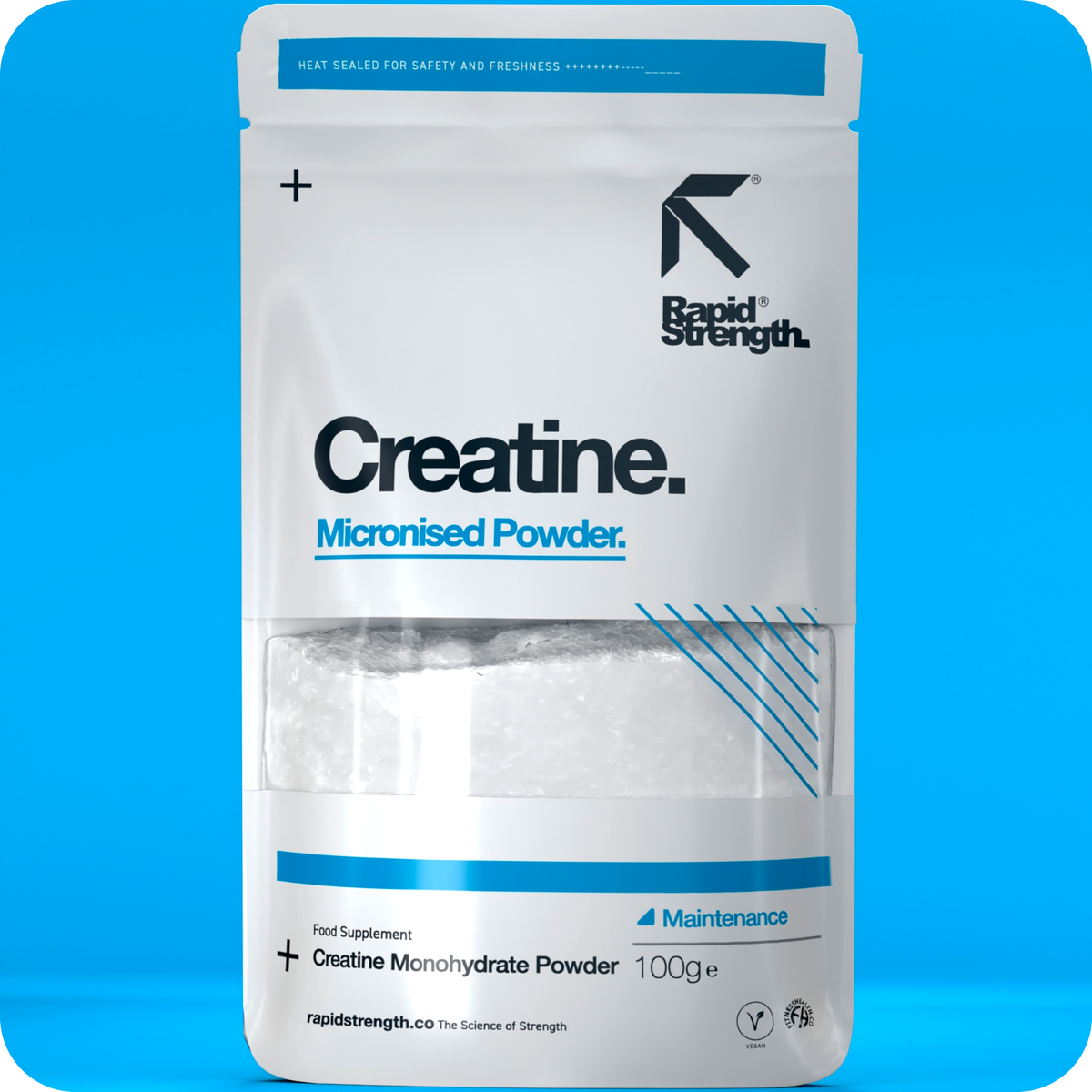
RapidStrength’s Creatine Monohydrate Powder 100g is listed as 100% pure creatine monohydrate, produced in the UK and suitable for vegan diets. It is also micronised to help it mix more easily.
How much whey protein should you take?
Start with the amount you need to complete your daily target.
For a typical protein shake, 20–30g of protein is practical for many people. Always check the nutrition label, because one scoop of powder does not always equal the same amount of actual protein.
You could use your shake:
- After training when your next meal is several hours away.
- At breakfast if your meal is low in protein.
- Between meals when you need an easy snack.
- Before bed if it helps you reach your daily total.
- On rest days when your food intake falls short.
There is no requirement to drink a shake immediately after your final set. Your total daily protein intake is the priority. However, having a shake within a few hours of training is an easy habit, especially if you train on a busy schedule.
How much creatine monohydrate should you take?
A common maintenance approach is 3–5g of creatine monohydrate per day, taken consistently on training and rest days.
You can choose between two approaches:
Option 1: Daily maintenance dosing
Take 3–5g every day. This is the simplest and most budget-friendly approach. It gradually saturates muscle creatine stores over several weeks without using extra powder.
Option 2: Loading phase
Some people take around 20g per day, split into several smaller doses, for approximately 5–7 days before moving to a 3–5g daily maintenance dose. Loading may increase muscle creatine stores more quickly, but it is optional.
For the RapidStrength 100g product, always read and follow the packaging directions. The product page currently suggests taking 10g with 200ml of water before, during or after a workout, with a daily dose not exceeding 20g unless supervised by a health professional. Product directions can vary, so check the label of the specific creatine product you buy.
If larger doses cause stomach discomfort, reduce the amount per serving or split it across the day. Anyone with a medical condition, taking medication, pregnant or breastfeeding should speak to a healthcare professional before supplementing.
Can you mix protein and creatine in the same shake?
Yes. Mixing creatine monohydrate into a protein shake is safe and convenient for most healthy adults.
A simple training-day shake could look like this:
- One serving of whey protein.
- 3–5g creatine monohydrate, unless your product label states otherwise.
- Water, milk or a milk alternative.
- Optional fruit or oats if you need extra carbohydrates and calories.
Take it post-workout, with breakfast or whenever you are most likely to remember it. The best timing is the timing you can repeat.
On rest days, you can take creatine with any meal or shake. You only need protein powder if your normal diet does not provide enough protein.

Budget tips for building the stack
1. Prioritise the basics
Before buying BCAAs, recovery blends or multiple performance formulas, make sure your diet, protein intake and training programme are consistent. Protein shakes and creatine monohydrate can provide more value than a shelf full of underused supplements.
2. Compare cost per serving
A low sticker price does not always mean the best value. Divide the product price by the number of servings, then compare the amount of protein or creatine per serving.
Large protein pouches often reduce the cost per shake. For creatine, a larger tub can be better value if you know you will use it consistently.
3. Choose whey concentrate when suitable
Whey concentrate is often more affordable than whey isolate. For many people, it provides excellent value. Isolate may be useful if you need a lower-lactose option or prefer its nutritional profile, but it is not automatically better for building muscle.
4. Buy plain creatine monohydrate
Unflavoured creatine monohydrate is usually the most economical option. There is no need to pay more for elaborate blends if your goal is simply to supplement creatine consistently.
5. Use food as your foundation
Eggs, dairy, meat, fish, tofu, beans and lentils can all contribute to your protein target. Use protein shakes to make your diet easier: not to replace every meal.
6. Watch promotions and shipping
RapidStrength regularly offers competitive prices and limited-time deals across supplements. Check the protein collection and muscle performance range before ordering, and consider combining products into one delivery where practical.
Your simple muscle-building checklist
For a straightforward routine:
- Train with progressive overload.
- Aim for a consistent daily protein target.
- Use one protein shake when food intake is not enough.
- Take creatine monohydrate every day.
- Mix both into the same shake if that makes consistency easier.
- Sleep well and stay hydrated.
- Track your training, body weight and progress over several weeks.
The protein shakes plus creatine monohydrate combination is not flashy: and that is exactly why it works so well. It is affordable, practical and easy to maintain. Build the habit, train hard and let the basics do their job.
This article is for general information only and is not medical advice. Always follow the product label and consult a qualified healthcare professional if you have a medical condition or concerns about supplementation.
Further reading
- RapidStrength Creatine Monohydrate Powder
- RapidStrength Protein Collection
- MyProtein Impact Whey Protein
- International Society of Sports Nutrition position stand on creatine
- Protein supplementation and resistance-training gains: systematic review and meta-analysis
- Review of creatine supplementation timing around exercise