

You don’t need a commercial gym packed with machines to build a wider, stronger back. With a solid cable station, multi-gym or compatible pulley system and the right lat pull down bar attachment, you can train your lats, traps, rhomboids and rear delts from home.
The key is using more than one grip, controlling every rep and progressing your resistance over time. This workout gives you a complete back-building session using vertical pulls, rows and isolation work : all with practical sets, reps and form cues.
Why use a lat pull down bar attachment?
A lat pull down bar gives you a stable, comfortable way to perform vertical pulling exercises. Instead of relying only on your hands or a short handle, the bar lets you choose a wider grip and create a consistent pulling path.
The RapidStrength Lat Pull Down Bar Cable Machine Attachment features a solid steel construction, a 110 cm total length and knurled handgrips measuring 12 cm. It weighs 1.2 kg and is designed to attach to compatible multi-gyms, cable machines and Smith machine setups.
That makes it useful for:
- Building back width with wide-grip pulldowns
- Training the lats through different elbow paths
- Performing controlled high-rep finishers
- Adjusting your grip without changing your whole setup
- Creating a versatile home pull workout
Always check that your cable system, carabiner and attachment point are compatible before training. Inspect the equipment regularly and use a load that allows you to maintain control.
Your complete home back workout
Perform this workout once or twice per week, leaving at least 48 hours between challenging back sessions. Start with the exercises that require the most strength, then move into more targeted movements.
1. Wide-Grip Lat Pulldown
Sets: 4
Reps: 8–12
Rest: 90 seconds
Attach the bar to the high pulley and sit or kneel in a stable position. Take an overhand grip slightly wider than shoulder width. Keep your chest lifted, brace your core and allow your arms to extend fully at the top.
Pull your elbows down towards your sides and bring the bar towards your upper chest. Pause briefly at the bottom, squeeze your lats and then return the bar slowly.
Form cues:
- Keep your torso mostly upright
- Lead with your elbows rather than pulling with your hands
- Avoid swinging backwards to move the weight
- Don’t pull the bar behind your neck
- Take two to three seconds on the return
The wide grip is an excellent way to start the workout because it challenges the lats while allowing you to focus on a strong, controlled vertical pull.
2. Shoulder-Width Lat Pulldown
Sets: 3
Reps: 8–12
Rest: 75–90 seconds
Move your hands closer to a shoulder-width position on the same lat pull down bar attachment. This grip often feels more natural for beginners and may allow a slightly longer range of motion.
Keep the same technique: chest up, shoulders down and elbows driving towards your ribs. Think about bringing your upper arms down rather than simply pulling the bar towards you.
Use a weight that leaves around one or two good-quality reps in reserve at the end of each set. If your grip or biceps gives out before your back, reduce the load and concentrate on keeping your shoulders relaxed.
3. Neutral-Grip Pulldown
Sets: 3
Reps: 10–12
Rest: 75 seconds
For a neutral-grip variation, switch to a compatible multi-grip attachment. The RapidStrength Multi Exercise Bar Cable Machine Attachment is designed for exercises including neutral-grip lat pulldowns and seated rows. Its rubber grip handles can also provide extra comfort during higher-volume training.
Choose a neutral handle with your palms facing each other. Pull your elbows down and slightly back, keeping them close to your body. This variation is a useful way to train the lats without using the same hand position for every set.

Make every rep count: let your shoulders rise naturally at the top to create a full stretch, but don’t allow the weight stack to crash down. Stay in control from the first centimetre to the last.
4. Seated Cable Row
Sets: 3
Reps: 8–12
Rest: 90 seconds
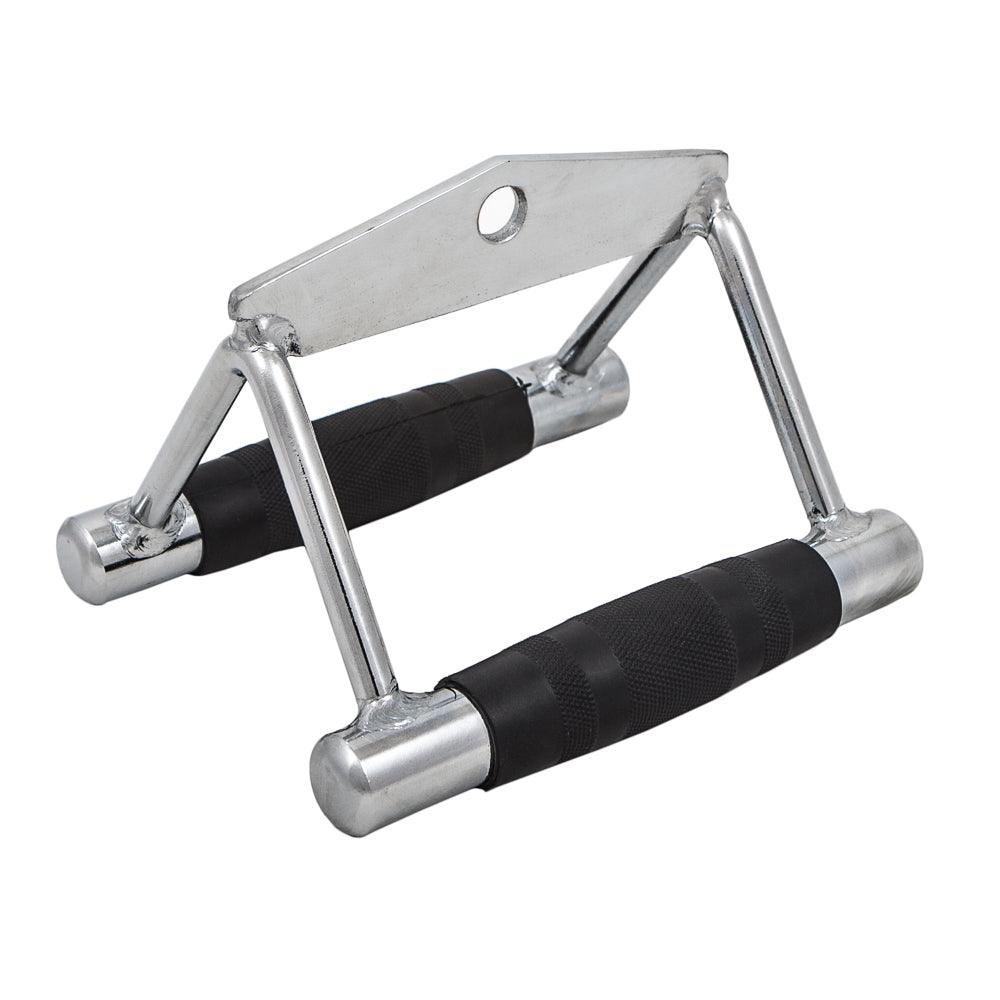
A complete back workout needs horizontal pulling as well as pulldowns. If your home setup allows you to use a low pulley, attach a V-grip handle and perform seated cable rows.
The RapidStrength FH V Grip Bar is made from high-grade steel with chrome plating and durable rubber grips. It is designed for use with multi-gyms and cable machines.
Sit tall with your feet braced. Start with your arms extended and your back neutral. Pull the handle towards your lower ribs, driving your elbows behind you. Pause as your shoulder blades draw together, then extend your arms under control.
Avoid turning the movement into a lower-back swing. If you have to rock back and forth to complete the reps, the weight is too heavy.
5. Single-Arm Lat Pulldown
Sets: 3 per side
Reps: 10–12 per side
Rest: 45–60 seconds between sides
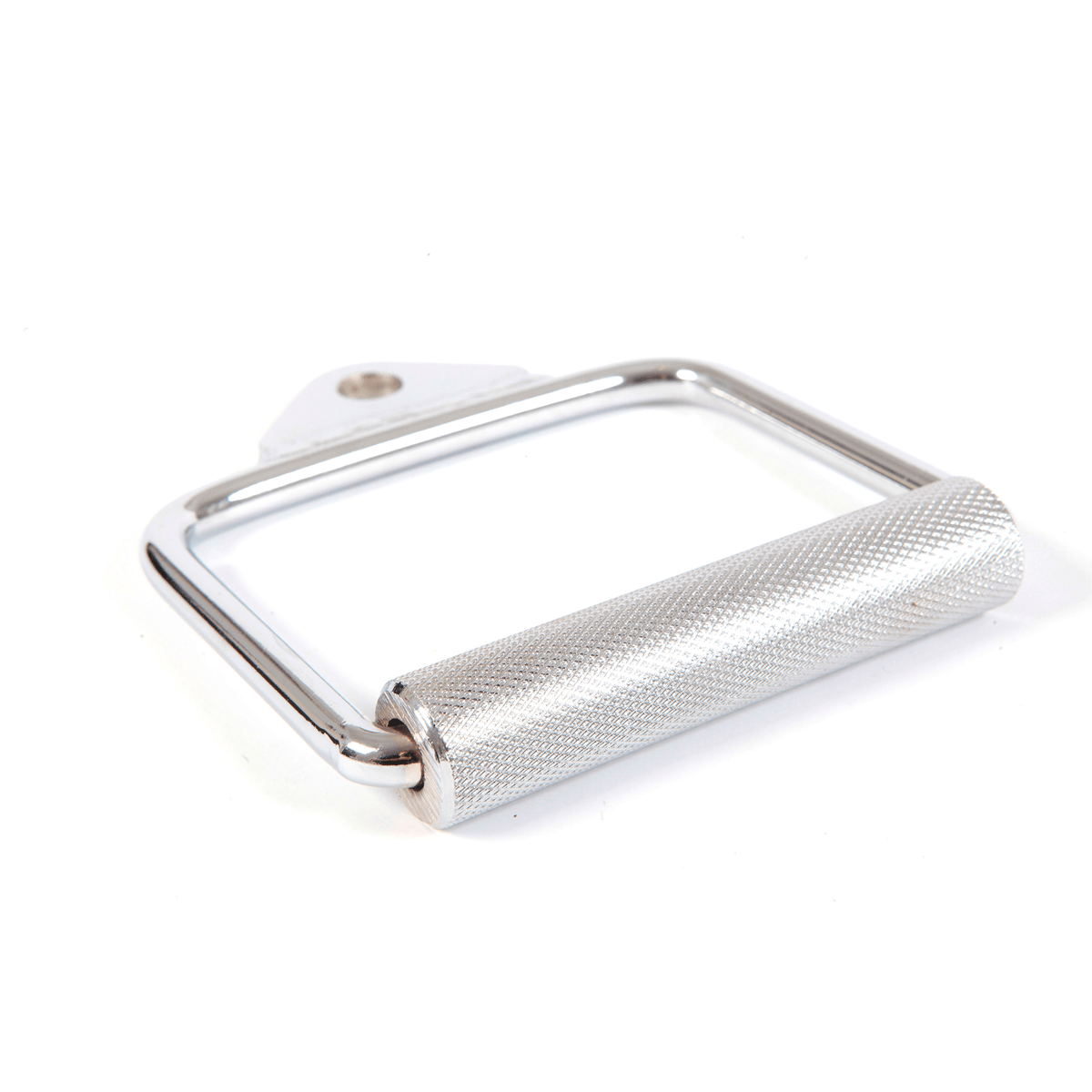
Finish the main pulling work with a single-arm variation. Attach a single handle to the high pulley and kneel or sit facing the machine.
Reach up with one arm, allowing your lat to stretch. Pull your elbow down towards your hip while keeping your ribs controlled and your torso steady. Pause at the bottom before returning to the start.
The RapidStrength Heavy Duty Single Hand Steel Pull Down Grip has a solid steel construction and knurled handgrip. A single-arm attachment makes it easier to focus on one side at a time and identify differences in strength or control.
Start with your weaker side and match its reps on the stronger side. Don’t twist your body to force the handle down.
6. Straight-Arm Pulldown
Sets: 3
Reps: 12–15
Rest: 60 seconds
Reattach the lat pull down bar attachment and stand facing the high pulley. Take an overhand grip around shoulder width and step back until the cable is under light tension.
Keep a small bend in your elbows but don’t turn the movement into a triceps pressdown. With your arms mostly straight, pull the bar down in an arc towards your thighs. Squeeze your lats at the bottom, then slowly raise the bar until you feel a controlled stretch overhead.
This is an ideal finisher because it reduces the amount of biceps involvement and lets you focus on shortening the lats. Keep the weight moderate and make the lowering phase deliberate.
How to progress your home back workout
A bigger back comes from consistent progression, not from changing exercises every session. Track your sets, reps and resistance so you know whether you are improving.
Use this simple double-progression method:
- Choose a weight you can lift for the lower end of the rep range.
- Keep the same weight until you can complete the top end of the range on every set.
- Increase the resistance slightly.
- Build your reps back up while maintaining strict form.
For example, if your target is three sets of 8–12 reps, you might complete 12, 11 and 10 reps this week. Keep the same load next time and aim for 12, 12 and 11. Once you can achieve 12 reps on all three sets with clean technique, add a small amount of resistance.
You can also progress by:
- Adding a brief pause at peak contraction
- Slowing the lowering phase
- Improving your range of motion
- Reducing unnecessary rest slightly
- Using a more challenging grip or variation
Don’t sacrifice technique just to move a heavier stack. Your back muscles should do the work, not momentum.
The lat pulldown form checklist
Before each set, run through these five points:
- Chest lifted: Keep your upper body strong and stable.
- Shoulders down: Avoid shrugging towards your ears.
- Elbows lead: Think about driving your elbows down or back.
- Bar to the front: Pull towards your upper chest, never behind your neck.
- Controlled return: Let the back stretch without dropping the weight.
You should feel your lats and upper back working. It’s normal for your biceps and forearms to assist, but if your arms are taking over completely, reduce the load and focus on the elbow path.
Build your home gym setup
A good lat pull down bar attachment can become the centrepiece of an effective home back routine. Combine it with a multi-exercise bar, V-grip attachment and single-hand handle to train your back through multiple angles without needing a large collection of machines.
Browse the full RapidStrength Gym Equipment collection to build a practical, affordable home setup. Train consistently, control every rep and gradually increase the challenge : then give your back the recovery, food and sleep it needs to grow.
Training equipment should always be used on a stable, compatible setup. Stop if you experience sharp pain or unusual discomfort, and seek professional advice if you are unsure whether an exercise is suitable for you.